
When it comes to high-value transportation research in the U.S., the Florida Department of Transportation (FDOT) is proud to produce research products that are recognized by its colleagues for their contribution to the transportation community.
For the second consecutive year, FDOT has won the High Value Research (HVR) award for Region 2 administered by the American Association of State Highway Transportation Officials (AASHTO) Research Advisory Committee (RAC).
The award recognizes research projects that can bring outsized returns—in time, money, safety, or other benefits—based on the initial investment made by the conducting State.
FDOT has won an HVR award in nine of the last 10 years.
“The devotion of the Department’s subject matter experts to advancing practice across a spectrum of transportation issues consistently has continued over the years to contribute to transportation system excellence and safety for travelers in Florida and beyond,” said Darryll Dockstader, manager of the FDOT Research Center.
FDOT’s 2024 winning project, Florida Slab Beam Bridge with Ultra-High Performance Concrete Joint Connections – Full Scale Testing and Analysis of Results (BDV29-977-65), developed methods to use UHPC joint connections between prestressed concrete beams to mitigate joint debonding or distress. These methods ultimately lead to reductions in construction time and costs while also increasing safety and durability for bridges with spans less than 55 ft.
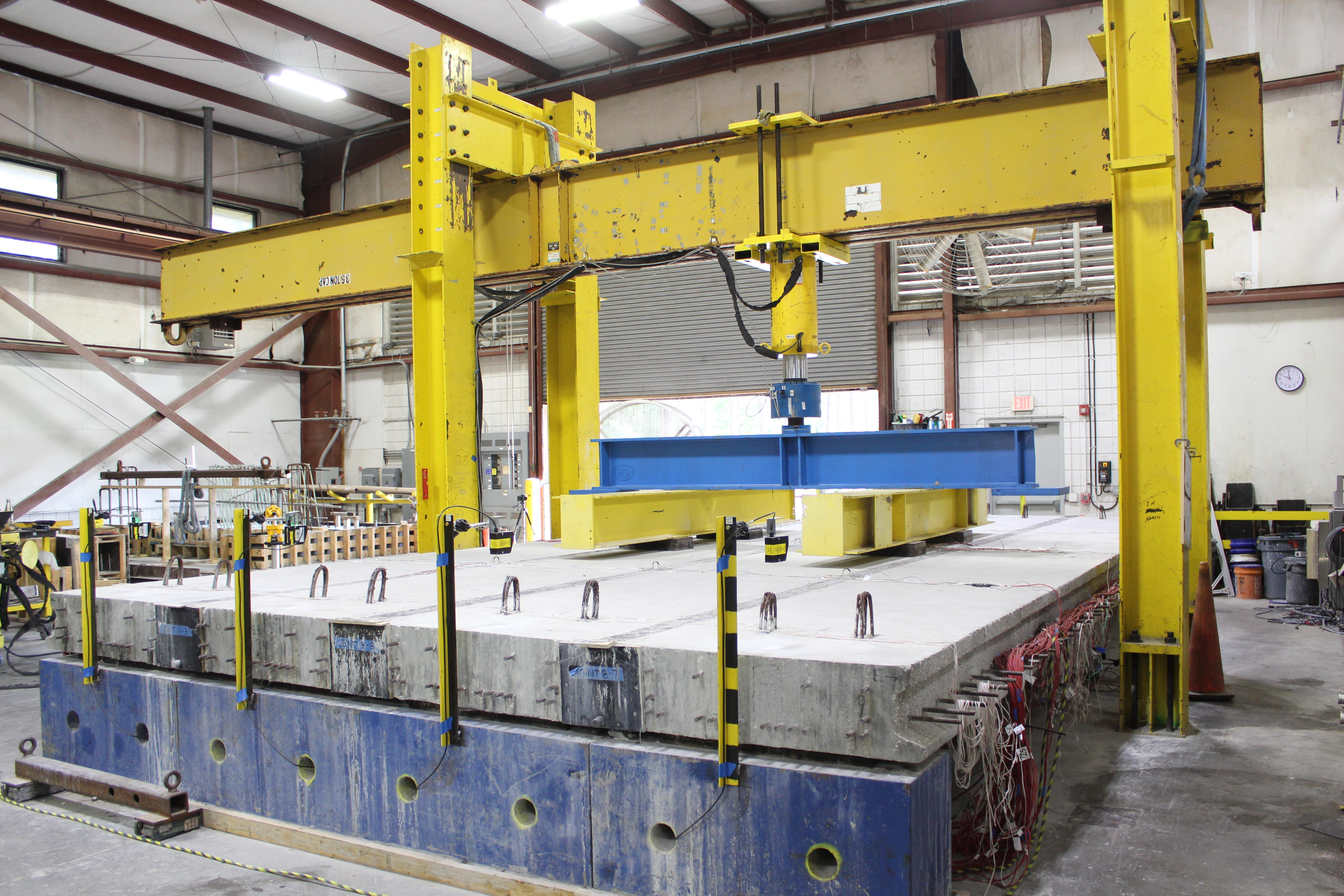
There are over 5,000 bridges with spans less than 55 ft in Florida and FDOT manages more than 1,700 of those bridges, so this research has the potential for great savings while improving bridge performance.
The Department partnered with Florida International University for the project.
“This is the next development for bridges constructed with shallow prestressed concrete beams,” said Christina Freeman, project manager for the winning project. “This research identified the best-performing UHPC joint geometry by a thorough evaluation of multiple different joints which were subjected to both static and fatigue loading.”

The results of the project have been used in the development of a single 53-foot span bridge alternate for an upcoming construction project in Florida’s District 1.
FDOT’s HVR Legacy
FDOT has competed in the HVR competition every year since 2013.Excluding 2014, the State has been recognized every year it has competed. Last year, FDOT won the HVR award for its research project Evaluation of FDOT Corrosion Prevention and Control Program (BE725).
Dockstader said awards are nice, but what they signify is what matters.
“We are proud to have won HVR again,” Dockstader said. “But it is our job to help improve Florida’s transportation system to make peoples’ lives better. We do that through research.”
Learn more about the Florida Department of Transportation Research Center at www.fdot.gov/research/.
Further reading
BDV29-977-65 Florida Slab Beam Bridge with Ultra-High Performance Concrete Joint Connections – Full Scale Testing and Analysis of Results Final Report | Summary
BE725 Evaluation of FDOT Corrosion Prevention and Control Program Final Report | Summary
FDOT High Value Research and Supplemental Award Projects and Years
| Year | Title | Project Number |
| 2024 | Florida Slab Beam Bridge with Ultra-High Performance Concrete Joint Connections – Full-Scale Testing and Analysis of Results | BDV29-977-65 |
| 2023 | Evaluation of FDOT Corrosion Prevention and Control Program | BE725 |
| 2022 | Pilot Implementation for Preventing Incorrect Turns at Highway-Rail Grade Crossings | BDV25-977-54 |
| 2021 | Enhanced Hydroplaning Prediction Tool | BE570 |
| 2021 | Evaluation of Techniques to Remove Defective Grout from Post-Tensioning Tendons | BDV31-977-58 |
| 2020 | Developing Florida-specific Mobility Enhancement Factors (MEFs) and Crash Modification Factors (CMFs) for TSM&O Strategies | BDV29-977-46 |
| 2019 | Development of Wrong-Way Driving (WWD) Countermeasure Implementation Plan | BDV29-977-36 |
| 2018 | Application of Demographic Analysis to Pedestrian Safety | BDV25-977-30 |
| 2018 | Alternative Aggregates and Materials for High Friction Surface Treatments (HFST) | BDR74-977-05 |
| 2017 | Validation and Implementation of Bridge Design Specifications for Barge Impact Loading | BDK75-977-31 |
| 2016 | Research Concerning the Detection, Mitigation and Prevention of Wrong Way Crashes | BDV30-977-10 |
| 2015 | Comparative Testing of Radiograph Testing, Ultrasonic Testing and Phase Array Advanced Ultrasonic Testing Non-Destructive Testing Techniques in Accordance with the AWS D1.5 Bridge Welding Code | BDK84-977-26 |
| 2013 | Aging Driver and Pedestrian Safety: Human Factors Studies | BDK83-977-09 |
 Florida Department of Transportation Research Showcase